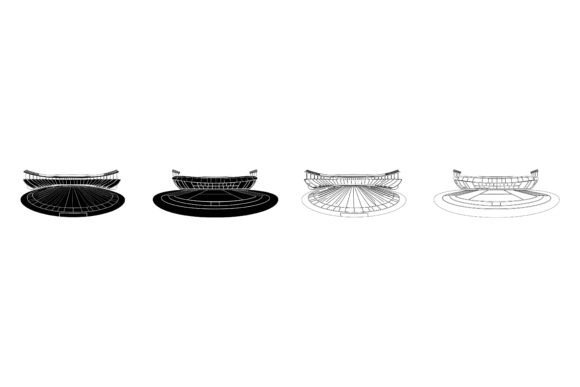
Finding Meaning and Creative Power in an Empty Stadium Illustration
There is something deeply compelling about an empty stadium. The silent seats, the untouched field, the absence of roaring crowds—it all carries an emotional weight that few other spaces can match. For designers, content creators, and brand storytellers, capturing that feeling in visual form opens up a world of creative possibility. The right illustration of an empty stadium doesn't just fill space on a page. It becomes a vessel for ideas, a backdrop for messages, and a versatile element that can shift meaning entirely depending on how you choose to use it.
Whether you're building a marketing campaign, designing an app interface, or creating infographics for a data-heavy report, an empty stadium illustration offers something rare: a balance between grand scale and quiet intimacy. It suggests potential, anticipation, loss, resilience, or unity—all without a single word. The challenge has always been finding artwork that respects that nuance while giving you the freedom to adapt it to your specific needs. That's where thoughtfully crafted vector collections make all the difference.
The Real Value of a Well-Made Empty Stadium Illustration
When you're searching for the perfect stadium image, you'll quickly realize that not all illustrations are created equal. A generic, flat graphic might get the general idea across, but it rarely carries the emotional depth or technical quality needed for professional work. The differences become obvious when you zoom in—literally and figuratively. Details like perspective accuracy, lighting consistency, and the subtle texture of empty seats can transform a basic stadium outline into a genuinely evocative visual tool.
Think about the specific project you're working on. Maybe you need to illustrate a concept about sports event planning in a post-pandemic landscape. Perhaps you're creating a report on fan engagement trends, or building a website for a venue that wants to showcase its scale and atmosphere even before the crowds arrive. In each case, the stadium illustration needs to communicate more than just architecture. It needs to convey a feeling that resonates with your audience and supports the larger story you're telling.
That's why the quality of the source file matters so much. A vector illustration built with precision gives you the ability to scale from a tiny app icon to a full print banner without losing clarity. You can isolate elements, adjust the mood through color shifts, and maintain consistency across dozens of different uses. The empty stadium transforms from a static image into a flexible component of your creative toolkit.
From Concept to Completion: How the Right Format Changes Everything
One of the most frustrating moments in any design workflow is finding the perfect visual, only to discover it's in the wrong format. You need something that works across multiple platforms, adapts to different software, and plays nicely with both print and digital outputs. This is where the combination of AI, EPS, and JPG files in a single collection provides genuine practical relief.
The AI and EPS formats give you complete vector control. You can open the file in Illustrator or similar software and immediately start making adjustments that reflect your brand's visual language. Need to shift the stadium's color palette from cool blues to warm oranges? You can do that in minutes. Want to remove certain seating sections or emphasize specific architectural details? The neatly organized file and layer structure means you're not wasting time hunting through tangled paths and unlabeled groups.
Meanwhile, the included JPG version serves as a ready-to-use option for quick placements, mockups, or situations where vector editing isn't necessary. Having all three formats available from the start means you're prepared for whatever the project demands next, rather than scrambling to convert files or compromise on quality because time ran short.
Seamless Work Across Platforms and Devices
Creative work rarely happens on just one device anymore. You might sketch ideas on a tablet, refine them on a Mac desktop, and then hand off files to a colleague working on a Windows machine. Every transition between devices and operating systems becomes a potential point of friction if your assets aren't fully compatible. An illustration set designed with both Mac and Windows users in mind removes that friction before it even appears.
This cross-platform reliability matters more than most people realize until they've lost an afternoon troubleshooting font rendering issues or layer compatibility problems. When the stadium illustration opens cleanly, renders correctly, and maintains its organized structure regardless of the operating system, you can focus your energy on creative decisions instead of technical workarounds. The consistency you see in the final product—whether viewed on a high-resolution monitor, printed on a large-format poster, or embedded in a mobile app—comes directly from the care taken during the file's creation.
Building Visual Stories with Detail and Consistency
Perfection in details isn't about obsessive pixel-polishing. It's about creating an illustration that holds up under every type of scrutiny your audience might apply. A viewer glancing at a website hero image might not consciously notice the accurate shadow placement or the realistic seat curvature, but they will feel the difference between something that looks professional and something that looks hastily assembled. That subconscious judgment affects how they perceive your entire message.
Consistency is equally important when you're using the empty stadium across multiple pieces of content. If the illustration appears in a social media post, a printed brochure, and an app onboarding screen, it should look like it belongs in each context while maintaining its core identity. The ability to edit colors and modify elements easily means you can create subtle variations that feel connected without being identical. Maybe the stadium appears in muted tones for a serious annual report and in vibrant colors for an event announcement—same structure, different emotional impact.
Applications That Extend Beyond the Obvious
An empty stadium illustration might seem specialized on the surface, but its real-world applications are remarkably diverse. For print projects, the high-quality vector lines translate beautifully to everything from business cards to billboards. In web design, the illustration can serve as a hero image, a section divider, or a background element that adds depth without distracting from the core message.
Symbol and icon designers will find that isolating sections of the stadium—a single seat block, the field markings, the entry tunnel—creates opportunities for smaller, recognizable symbols that still carry the stadium's conceptual weight. App developers can incorporate these elements into user interfaces for sports-related platforms, event management tools, or community engagement features. Infographics benefit from the stadium as a metaphor for capacity, attendance data, or growth trajectories, turning abstract numbers into something visually intuitive.
What makes the empty stadium particularly versatile is its neutrality. Unlike an illustration packed with specific branding, colors, or crowd imagery, the empty space invites you to project meaning onto it. It can represent hope for a startup, resilience for a nonprofit, or anticipation for an event promoter. The same visual asset can tell entirely different stories depending on the context you build around it.
Making the Stadium Yours: The Freedom to Modify and Adapt
Perhaps the most valuable quality in any creative resource is the ability to make it your own. Pre-made illustrations used to carry the stigma of looking generic or forcing you into someone else's aesthetic choices. But when the files are properly structured and genuinely editable, that limitation disappears. You can change colors to match your brand palette, modify elements to suit your specific narrative, and reshape the illustration so thoroughly that it becomes indistinguishable from custom work.
This level of control pays off in practical ways. If your client decides at the last minute that the stadium should reflect their team colors rather than neutral tones, you can accommodate that request quickly. If you need to create a series of illustrations showing the same stadium at different times of day or in different seasons, you can build that variation from the base file without starting over. The organized layer structure isn't just a technical nicety—it's the foundation that makes efficient, responsive design work possible.
For professionals juggling tight deadlines and high expectations, this combination of quality and flexibility reduces stress and opens up creative possibilities. You stop searching for the perfect image and start building it from a solid, well-crafted starting point. The empty stadium becomes a canvas rather than a constraint.
Why Starting Now Matters for Your Next Project
Creative momentum is fragile. When you find a resource that fits your vision and gives you room to grow, delaying the decision rarely serves you well. The right illustration set becomes part of your workflow immediately—solving current design challenges while also standing ready for future needs you haven't fully mapped out yet. Every day you spend making do with lower-quality alternatives is a day your project doesn't reach its full potential.
The empty stadium illustration, with its combination of emotional depth, technical quality, and editing flexibility, represents the kind of asset that creative professionals return to again and again. Whether you're crafting a single impactful presentation or building a comprehensive design system that will evolve over months and years, having reliable, well-organized vector files changes how you approach visual problem-solving.
So what are you waiting for? The crowd hasn't arrived yet, the field is set, and the possibilities stretch out in every direction. An empty stadium isn't empty at all—it's full of potential, waiting for you to define what happens next. Start using illustration that meets the demands of your work, respects the intelligence of your audience, and gives you the tools to create something genuinely memorable.