Vector Glyph Birthday Cake Set: A Strategic Design Resource for Clearer Visual Communication
Every visual element you place in a project carries weight. A poorly chosen icon or an inconsistent illustration can quietly undermine the professionalism of an otherwise well-planned campaign, presentation, or product interface. The Vector Glyph Birthday Cake Set addresses a very specific but surprisingly frequent design need—celebratory, food-related, and event-driven iconography—with a level of structural precision that makes it more than just another bundle of clip art. Understanding what this collection offers and, more importantly, when and how to deploy it thoughtfully, can save hours of revision time and help maintain a cohesive visual language across multiple touchpoints.
This particular set belongs to a broader category of AI EPS illustration collections designed with both Mac and Windows users in mind. The files arrive in industry-standard formats—Adobe Illustrator (AI), Encapsulated PostScript (EPS), and high-quality JPG previews—which means they slot into existing workflows without requiring format conversion gymnastics. But format compatibility is table stakes in the design resource market. What separates a genuinely useful glyph set from a folder of forgettable vectors is how it handles organization, editability, and detail consistency. Those are the areas where strategic value either materializes or evaporates.
What the Vector Glyph Birthday Cake Set Actually Contains
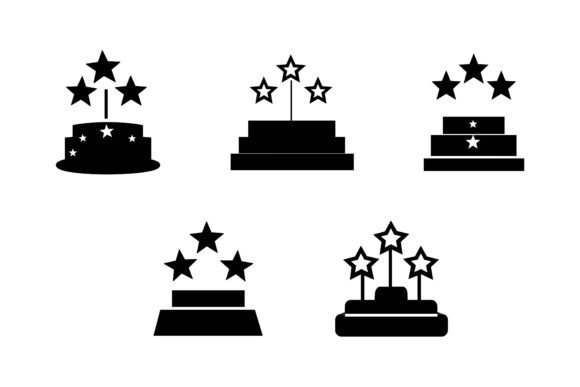
At its core, this is a curated collection of birthday cake illustrations rendered in a glyph style—clean, minimal, symbol-like representations that prioritize silhouette clarity and scalable simplicity. Unlike photorealistic dessert imagery or ornate hand-drawn illustrations, glyph-based icons communicate through reduction. They strip the subject down to recognizable forms that work at sizes ranging from a mobile app navigation button to a large-format event banner.
The files are neatly organized with deliberate layer structuring. For anyone who has opened a downloaded vector file only to find dozens of unnamed, ungrouped paths scattered across a single layer, this organizational discipline matters. A well-structured file reduces the friction between downloading an asset and actually using it in a real project. You can locate the specific cake variation you need, isolate it, and begin customizing without first spending twenty minutes untangling the artwork.
Editable Foundations, Not Locked Graphics
One of the stated strengths of this collection is the ease with which users can edit colors, modify individual elements, and adapt the icons to specific needs. This is not a set of flattened, unchangeable PNGs. Because the artwork exists as true vector paths, you can recolor a cake icon to match brand guidelines, adjust stroke weights for different display contexts, or even deconstruct a glyph to repurpose individual decorative elements—frosting swirls, candle arrangements, or cake tier shapes—into entirely new compositions.
This editability transforms the set from a one-time-use decoration into a reusable component library. A marketing team preparing quarterly birthday recognition emails, an app designer building a loyalty rewards interface, or a print shop producing customizable party invitations can all draw from the same foundational assets while tailoring the output to their distinct requirements.
Where Strategic Consistency Meets Creative Flexibility
Visual inconsistency is one of the most common and easily avoidable problems in multi-channel communication. A company might use a detailed, illustrated cake on their website banner, a flat cartoon cake in their email footer, and a photographic cake on social media—each sourced from different places, each carrying a different visual tone. The result is a fragmented brand experience that erodes recognition and trust over time.
The Vector Glyph Birthday Cake Set offers a solution not because it contains every possible cake illustration you will ever need, but because its internal consistency provides a reliable baseline. When all the glyphs in a set share the same design DNA—similar line weights, comparable levels of detail, consistent optical sizing—they naturally reinforce each other when used together. A birthday-themed landing page that pulls three or four glyphs from the same collection will feel intentional and cohesive rather than assembled from mismatched parts.
Applications Across Print, Web, and Interface Design
The versatility of this set extends across mediums that demand different technical specifications. For print projects—menus, party invitations, loyalty cards, bakery signage—the EPS files preserve crisp edges at any scale and play nicely with professional printing workflows. For web and app interfaces, the same glyphs can be exported as SVGs or optimized PNGs, maintaining pixel-perfect clarity on retina displays and responsive layouts. For infographics and presentation decks, the JPG previews offer quick placement options when full vector editing is unnecessary.
This cross-medium suitability reduces the need to source separate assets for each channel. A bakery owner designing both a physical menu board and an online ordering interface can maintain visual continuity by using the same glyph set adapted appropriately for each surface. The design language stays intact; only the technical delivery changes.
Making Intentional Decisions About Visual Assets
Before purchasing any illustration set, including this one, a practical question deserves attention: where exactly will these glyphs live, and what job will they perform? Assets acquired without a clear functional purpose tend to sit unused in folder structures, contributing to digital clutter rather than creative output. The most effective approach involves mapping specific use cases before committing to a purchase.
Consider whether your current or upcoming projects genuinely need birthday-themed glyph illustrations. If you operate a business where birthdays are a recurring touchpoint—a restaurant with a birthday club program, an HR platform with employee celebration features, a CRM system that triggers birthday automations, or an event planning service—then a dedicated, editable set of cake glyphs serves a recurring operational need rather than a one-off decorative impulse.
If, however, you anticipate using a single cake icon once on a single project, the strategic value equation shifts. In that scenario, the investment may still be justified if the quality, editability, and organizational structure save enough time compared to hunting for a free alternative that may require extensive modification or carry unclear licensing terms. The calculation is not about absolute cost but about time recovery, output quality, and reuse potential over the asset's useful lifespan.
Customization as a Brand Alignment Practice
Generic stock assets carry an inherent risk: they look like stock assets. Audiences have grown visually literate enough to recognize when a website or app uses the same widely available illustrations that dozens of other properties also display. The editability of this glyph set provides a path around that problem. Changing colors to match a brand palette is the most obvious first step, but more nuanced customization creates genuine distinctiveness.
You might adjust the proportion of certain cake elements to echo shapes already present in your logo or interface design language. You could simplify a glyph further for use as a favicon or app icon while keeping the fuller version for hero images. You might combine a cake glyph with a typographic treatment that is uniquely yours. These small acts of adaptation transform a purchased asset into something that belongs specifically to your project's visual world.
Planning the Integration into Existing Workflows
Design teams and solo practitioners alike benefit from thinking about asset integration before the moment of urgent need arrives. When a deadline looms and a birthday-themed visual is suddenly required, having a pre-organized, pre-vetted glyph set ready in the asset library prevents reactive, lower-quality decisions. The Vector Glyph Birthday Cake Set fits into this proactive planning model when treated as a building block rather than an afterthought.
One practical approach involves importing the AI or EPS file into a shared team library—whether that is an Adobe Creative Cloud Library, a Figma team component set, or a Canva brand kit—and tagging it appropriately so colleagues can discover and apply the glyphs without duplicating effort or drifting off-brand. The organized layer structure in the original files makes this import process smoother, as individual elements can be extracted cleanly rather than requiring manual separation.
Layer Structure and Non-Destructive Editing Habits
The file organization emphasized in this collection supports non-destructive editing, a workflow principle that preserves original artwork while allowing endless variations. By duplicating a layer before making changes, you retain a reference point for future edits. By using adjustment layers or appearance attributes rather than directly altering paths, you maintain the ability to revert or iterate without rebuilding from scratch.
These habits may seem like technical minutiae, but they compound over time. A designer who works non-destructively with well-organized source files can produce more variations in less time and with fewer errors than one who constantly fights against chaotic layer structures. The Vector Glyph Birthday Cake Set supports these good habits through its initial organization—but the user must still practice them.
Recognizing the Limits of Any Single Resource
No illustration set, regardless of quality or editability, solves every visual communication challenge. The birthday cake theme is specific, and attempting to stretch these glyphs into contexts where they do not naturally belong creates awkward, forced design outcomes. A cake icon on a financial dashboard, for instance, would require significant contextual justification to avoid feeling gimmicky or off-tone.
Strategic asset selection means being honest about what a resource can and cannot do. This set excels for celebratory, event-driven, food-related, and milestone-oriented communications. It can support bakery branding, party planning materials, birthday automation workflows, age-related service offerings, and loyalty program interfaces. Outside of those domains, its relevance diminishes quickly. Recognizing this boundary is part of using the resource well rather than forcing it into unsuitable territory.
Evaluating Long-Term Value Beyond the Initial Purchase
The durability of a vector asset purchase depends partly on the formats provided and partly on how design trends evolve. AI and EPS formats have remained relevant for decades and show no signs of disappearing from professional design pipelines. The glyph style itself—minimal, symbolic, silhouette-driven—tends to age more gracefully than highly stylized illustration trends that cycle rapidly in and out of fashion.
This does not guarantee indefinite relevance, but it does suggest that a well-made glyph set is less likely to look dated within a year or two compared to illustrations that lean heavily on contemporary stylistic gimmicks. The focus on clean geometry and readable forms gives the work a functional quality that transcends seasonal design fads.
Practical Scenarios Where the Set Delivers Measurable Value
Consider a small marketing agency managing social media content for multiple restaurant clients. Birthdays are a universal promotional opportunity, but each client has different brand colors, different visual tones, and different audience expectations. Rather than commissioning custom illustrations for each client's birthday posts—an expensive and time-consuming approach—the agency can use the Vector Glyph Birthday Cake Set as a foundation, recoloring and subtly modifying the glyphs to align with each brand while maintaining professional quality and visual consistency across the campaign calendar.
Consider also an internal communications team at a mid-sized company that celebrates employee birthdays monthly. They produce a digital newsletter, update the intranet banner, and create printed recognition cards. Using the same glyph set across all three channels—exported at appropriate resolutions and in appropriate formats for each—creates a polished, intentional employee experience without requiring advanced design skills or external vendor coordination.
Even solo creators—a blogger writing about party planning, a freelancer designing event invitations, a hobbyist crafting personalized greeting cards—can extract value from editable, well-organized glyphs that eliminate the friction between having an idea and executing it cleanly.
Using Intention Instead of Impulse
The difference between a resource that generates return on investment and one that gathers digital dust often comes down to the intention behind its acquisition. Before purchasing the Vector Glyph Birthday Cake Set, articulate at least one concrete project or recurring use case that justifies the addition to your toolkit. If that use case exists and aligns with the set's strengths—celebratory contexts, food-related design, event marketing, milestone communications—then the resource earns its place. If the use case feels vague or unlikely to materialize, waiting until a genuine need arises may serve you better than accumulating assets preemptively.
This disciplined approach to resource acquisition reflects a broader strategic mindset: tools and assets exist to serve goals, not to fill folders. When you connect a specific vector set to a specific purpose, you transform it from a potential into a productive element of your creative workflow. The Vector Glyph Birthday Cake Set is well-positioned to serve those who have taken the time to understand what they need, why they need it, and how they plan to integrate it into their larger communication and design strategy.