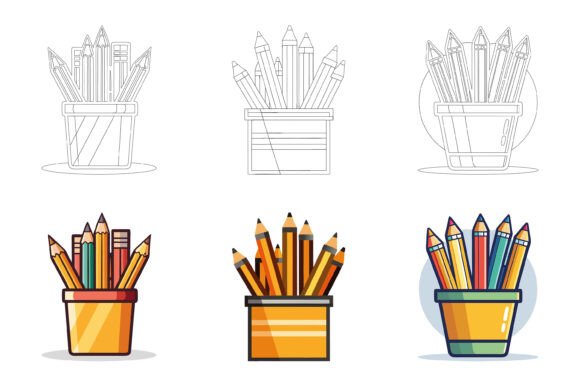
Pencil Box: A Creative Toolkit for Everyday Projects
Finding the right visuals for a project can feel like searching for a needle in a haystack. Maybe you need a crisp icon for a mobile app, a playful graphic for a blog post, or even full illustrations for a printed brochure. The challenge isn't just locating a decent image—it's finding something that actually fits your vision without spending hours in complicated design software. This is where the Pencil Box illustration set steps in, offering a thoughtful mix of polish and practicality. It bundles a collection of ready-to-use artwork into one organized package, giving you both creative control and a shortcut past tedious technical work.
At its heart, the Pencil Box collection is about removing friction. You get access to professionally crafted illustrations that don't lock you into a single look. The included files—AI, EPS, and JPG formats—mean you have options right from the start, regardless of your technical background. Whether you're a seasoned designer or someone opening a vector file for the first time, the structure of the set is built to keep things simple.
What Makes These Illustration Files Stand Out
Anyone can download a free clipart pack, but it's the behind-the-scenes organization that changes how you work. The Pencil Box sets are created with a clear empathy for the end user. This isn't just a jumble of images dumped into a folder. You'll notice a consistent attention to detail that translates into less stress when you're deep into a project.
One of the first things you'll appreciate is the logical file and layer structure. Inside the AI and EPS files, every element is separated onto named layers. Instead of wrestling with one massive flattened group of shapes, you can quickly locate the specific object you need to tweak. For a small business owner updating a flyer, this means you can isolate a single icon and change its size or position without accidentally shifting the background elements. For a blogger customizing a social media graphic, you can reorder items or remove parts you don't need in seconds.
Detail and consistency also run through every piece of art. Each illustration maintains a uniform style, weight, and level of intricacy. That matters when you're building a presentation or branding a website. Mixing assets from different sources often leads to a patchwork look that undercuts your professionalism. Because the Pencil Box visuals are designed as a cohesive family, your finished product feels intentional and polished, even if you're not a trained designer.
Works Where You Work
Compatibility headaches can stop creativity in its tracks. You open a file only to find it's locked to a single operating system or requires software you don't own. The Pencil Box illustration set is intentionally crafted for both Mac and Windows users. If you switch between a Windows laptop at work and a Mac at home, you won't hit a wall. Pop open the EPS in your program of choice and start editing.
The file types included add another layer of flexibility. The JPG versions are perfect for quick placements—just drag them into a Word document, a PowerPoint slide, or an email newsletter. When you need to scale a graphic up to poster size without losing sharpness, the AI and EPS vectors are there. This dual-format approach means you aren't limited to one type of project. From crisp digital screens to high-DPI commercial print, the same illustration can move through your workflow without becoming blurry or pixelated.
Real-World Uses for Hobbyists and Professionals Alike
One of the quiet strengths of the Pencil Box collection is how it sidesteps the "one-size-fits-all" trap. A teacher designing a classroom worksheet will use the art very differently from a marketer building an app interface. The pack's design makes room for both.
Take the education sector. An educator can pull cheerful, uncluttered illustrations from the set to create flashcards, reward charts, or simple visual aids. The JPG is ready right away, but if they want to customize the colors to match a school theme, the AI file opens that door easily. There's no need to learn everything about vectors—just basic selection and fill tools.
For entrepreneurs and small business owners, the value grows rapidly. Launching a website often requires a hero image, some feature icons, and maybe a few infographic elements. With the Pencil Box assets, you can pull from the same cohesive set for all of those spots. Your "About Us" page graphic and your printed brochure suddenly share the same visual language. That consistency bolsters brand recognition without the cost of a custom illustrator.
Digital creators—bloggers, YouTubers, and social media managers—will find the editability refreshing. Let's say you want to change the primary color scheme of an illustration to match your latest blog post. Inside a typical flat image, that's painstaking, pixel-by-pixel work. But with the layered AI or EPS files, you can modify the color of specific sections in a few clicks. Want a sunset palette instead of morning blues? No problem. Need to extract just a single symbol from a larger scene for your app's notification icon? The organized layers let you isolate it quickly.
Print, Web, and Everything In Between
The versatility of the Pencil Box illustrations extends across media. Print materials like flyers, business cards, and event banners require high-resolution files that don't break apart under scrutiny. The vector foundation of the AI and EPS formats ensures your print shop gets the clean edges they need. On the other hand, web usage demands smaller, optimized files that load fast. You can scale down and export sections as needed.
Apps and infographics also benefit directly. App interfaces often feature dozens of tiny icons that must remain legible at very small sizes. Because the vector art is mathematically defined, you can shrink a complex symbol down to 16x16 pixels and still keep its meaning clear. Infographic designers can pull data-related icons, people characters, and decorative elements from the same pack, maintaining a unified aesthetic that improves reader comprehension.
A practical example: imagine you're putting together a quarterly report for your team. You need to illustrate customer growth, revenue spikes, and product adoption. Instead of hunting through three different icon packs that all have slightly different line weights and styles, you open your Pencil Box files. You pick the relevant charts, symbols, and human figures. Because everything was created with the same guiding design principles, the resulting slides feel professional and coherent, even if you aren't a data visualization expert.
Customizing Art Without the Headache
A common fear when buying illustration packs is getting stuck with someone else's fixed vision. You might love the style but need a specific item to be green instead of red, or you might want to remove a decorative flourish altogether. The Pencil Box set is built with this in mind, explicitly encouraging modification.
The phrase "you can edit it, change colors and modify the icon so easily according to your needs" isn't just marketing noise. When the layer structure is neat and logic-driven, even someone relatively new to Adobe Illustrator or similar vector tools can open the file and make meaningful adjustments. You don't need to be able to draw from scratch; you just need to select a shape and pick a new fill color. Removing an icon is often as simple as hiding a layer. This reduces the barrier between you and a personalized final product.
Consider a freelancer building a portfolio site. They might download the Pencil Box set and instantly adopt the original colors because they match the template. But another freelancer, whose brand uses warm terracotta tones, can open the same file, quickly recolor a few key elements, and export an image that feels tailor-made. That kind of flexibility makes the assets reusable across multiple client projects, providing far more value than a static JPG ever could.
Important Considerations Before You Jump In
No toolkit is right for every single situation, so a clear-eyed look helps. First, think about the software you actually have access to. While the JPG versions can be used by anyone, unlocking the full editing power of the AI and EPS files requires a program like Adobe Illustrator, CorelDRAW, Affinity Designer, or Inkscape. You don't need to be an expert, but you should at least have the software installed and be willing to spend a little time learning the basics of selecting and recoloring objects.
Also assess the specific style of the illustrations. Even the most beautifully crafted artwork won't help if it clashes with your brand's personality. Look closely at the preview images to ensure the line work, color palette, and overall mood align with what you're building. A set that leans heavily into flat, minimalist corporate art might not sit well on a whimsical children's party invitation, even if you can change the colors. The Pencil Box style has a particular character—make sure it's a character that fits your story.
File organization, while a huge plus, still requires you to maintain that structure on your own computer. When you download the pack, take five minutes to store it in a logical folder system. Back it up. Name it clearly. You don't want to rediscover a folder called "download_021" six months later and wonder what's inside. Treat these files as the valuable resources they are.
Finally, understand the license terms. Most commercial illustration sets grant broad usage rights for personal and client projects, but they often restrict direct resale of the files themselves. That means you can't package them up and sell them as a standalone "new" product. You can, however, use them in websites, apps, social media posts, printed books, and marketing collateral. Always skim the license to confirm it matches your intended use—especially if you plan to incorporate the art into a logo or trademark.
Who Benefits Most from This Collection
The appeal of the Pencil Box set stretches across a wide range of people, largely because it's built to accommodate different skill levels. Beginners who are just dipping their toes into design can start with the JPGs and slowly graduate to editing the layered files as their confidence grows. The organized structure acts as a quiet teacher, showing how professional vector art is constructed.
Creators running their own shops—Etsy sellers, course instructors, indie authors—will appreciate how quickly they can produce visually strong marketing assets without outsourcing. A single purchase can supply the visuals for several months of social content and product listings. For established professionals, the pack becomes a reliable resource to speed up rough drafts and client mockups. Instead of illustrating a concept from a blank artboard during an exploratory meeting, they can pull a few ready-made icons, tweak them, and present a near-finished look in minutes.
Educators and nonprofit coordinators often operate with limited budgets. A thoughtfully assembled illustration set can become the backbone of newsletters, event flyers, and educational materials. Because the files are so editable, they can adapt to future needs without additional cost.
The invitation to "Buy now and start using this awesome illustration" sums it up nicely, but the real attraction isn't just the immediate use—it's the sustained usefulness over time. A project you finish next month, or even next year, can still leverage these same assets in a fresh way. Whether you're designing an invitation, updating a website header, or scratching out a new app idea, having a reliable library of clean, consistent, and easily editable illustrations at your fingertips makes the path from idea to completion noticeably smoother.