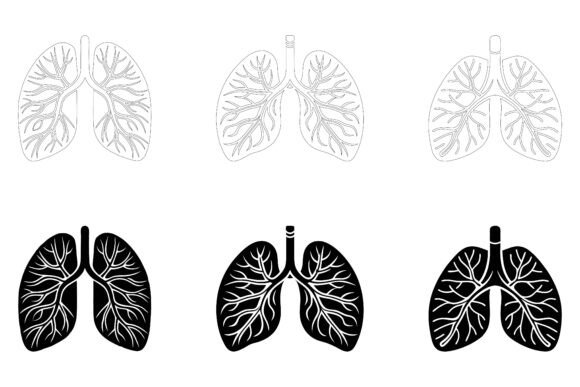
Trachea Organ Simple Line Illustrations: Uses & Benefits
Visual communication often demands clarity without overwhelming the audience. A well-crafted trachea organ simple line illustration delivers exactly that. It strips away unnecessary complexity and presents anatomical information in a clean, modern format that works across countless projects. Whether you are building a medical app, designing an educational poster, creating an infographic, or assembling brand assets for a wellness clinic, having editable vector artwork of the trachea can save hours of design time while maintaining professional standards.
What you get with this particular illustration goes far beyond a basic outline. The file package includes AI, EPS, and JPG formats, all thoughtfully prepared for both Mac and Windows users. That cross-platform readiness removes friction right from the start. You do not have to worry about conversion issues or missing fonts. You simply open the file in your preferred vector editing software and begin adapting it to your project. The trachea organ simple line illustration retains its crisp edges and scalability no matter how large or small you need it, which is essential when a single graphic must appear on a mobile screen and a printed banner simultaneously.
The Design Philosophy Behind the Artwork
Many stock illustrations fall short when you zoom in. Jagged curves, uneven stroke weights, and sloppy anchor points quickly betray amateur work. This collection takes a different approach. Every line in the trachea organ simple line illustration is placed with intention. The designer maintained consistent stroke widths, balanced negative space, and an overall aesthetic that feels both scientific and approachable. That balance is harder to achieve than it looks. Too much detail, and the illustration becomes unusable at small sizes. Too little, and it fails to convey anatomical accuracy. The result here is a middle ground that appeals to medical professionals and casual audiences alike.
File organization deserves a mention because it affects real-world efficiency. The layers are neatly structured and clearly labeled. You can isolate the trachea outline, adjust the shading layer, or hide annotation markers in seconds. This layer discipline means you spend less time hunting through unnamed paths and more time refining your design. The consistency across all elements also helps when you need to pair the trachea with other organs from the same collection. The visual language stays coherent, which strengthens brand identity in health-related materials.
Where These Illustrations Truly Shine
The applications for a trachea organ simple line illustration are broader than many people initially assume. Here are several environments where this type of graphic becomes surprisingly valuable:
- Print materials: Pamphlets, clinic brochures, anatomy textbooks, patient education handouts, and conference posters benefit from clean, high-resolution vector art that does not pixelate at larger scales.
- Web and mobile interfaces: Health apps, telemedicine platforms, symptom checkers, and medical reference sites often use simple organ icons for navigation or explanatory diagrams. The lightweight visual style fits modern UI design perfectly.
- Symbols and icons: The line-based aesthetic translates seamlessly into app icons, website favicons, and interface elements where space is limited and clarity matters most.
- Infographics and data visualization: When you need to illustrate respiratory processes, airway conditions, or treatment pathways, a trachea organ simple line illustration provides a clear focal point without distracting from the surrounding data.
- Educational content: E-learning modules, video presentations, slide decks, and classroom worksheets gain immediate credibility when professional illustrations replace crude sketches or low-quality images found online.
- Branding and marketing: Healthcare startups, wellness blogs, pulmonary clinics, and fitness brands can incorporate subtle anatomical line art into logos, social media templates, and merchandise designs.
Editable Without the Headaches
One standout feature of this collection is genuine ease of customization. You receive AI EPS and JPG files, but the vector formats give you full control over every path and color. Need the trachea in your brand's teal instead of standard gray? Select the path and apply a new fill in seconds. Want to increase the stroke weight for a bold presentation slide? A quick adjustment in Illustrator or any compatible editor handles it. This flexibility means one purchase supports dozens of diverse projects over time.
The editing experience also respects users with different skill levels. Seasoned designers can dig into advanced modifications such as adding gradient meshes or integrating the trachea into complex compositions. Beginners can make straightforward color swaps and size adjustments without needing to master the pen tool. The file is non-destructive by nature. You always work on copies of the original, so experimentation carries no risk.
People often ask about compatibility. The EPS format opens in CorelDRAW, Affinity Designer, Inkscape, and older Illustrator versions without issues. The AI format preserves native Illustrator features for those who prefer Adobe workflows. The JPG serves as a quick preview or a ready-to-use image when vector editing is not required. Mac users and Windows users encounter zero barriers because the file structure adheres to cross-platform standards. That inclusivity matters in collaborative environments where teammates operate on different systems.
Observations on Quality and Detail
Attention to anatomical detail separates educational illustrations from generic clip art. The trachea organ simple line illustration in this collection captures the characteristic cartilaginous rings, the smooth muscle contours, and the bifurcation into primary bronchi with accuracy that supports learning. Educators and medical communicators can confidently use this graphic knowing it represents the anatomy correctly. This level of detail, paired with the simplicity of line art, makes the image suitable for both introductory materials and more advanced discussions.
Consistency across related files in the collection is another practical consideration. If you decide to expand your library with other organ illustrations from the same set, they will share the same line quality, color palette options, and layer organization. That uniformity reduces the jarring visual clashes that often appear when designers mix assets from multiple sources. Your presentations and publications look intentionally curated rather than hastily assembled.
Practical Considerations Before You Start
When incorporating any vector illustration into your workflow, a few thoughtful steps will help you get the best results. First, consider the context in which the trachea organ simple line illustration will appear. For print projects, set your document color mode to CMYK early and adjust the illustration colors accordingly. For digital screens, stick to RGB and test the graphic on multiple devices to confirm readability at various resolutions.
Second, respect the license terms that come with the purchase. Most stock illustration licenses allow broad commercial use, including client work, merchandise, and digital products. However, reselling the raw files or redistributing them as standalone assets is typically prohibited. Understanding these boundaries protects your business and the original creator.
Third, plan for version control. When you customize the illustration extensively, save your modified files with clear naming conventions. Months later, when you revisit a project, locating the correct version becomes effortless. Many designers also keep a pristine copy of the original file untouched in a master assets folder.
Why Professionals Choose This Format
The shift toward lightweight visual communication has accelerated across industries. Minimalist line illustrations align with current design trends while remaining timeless enough to avoid looking dated in a few years. The trachea organ simple line illustration fits neatly into this movement. It does not rely on gradients, 3D effects, or stylistic embellishments that might clash with future branding updates. Instead, it offers a foundational visual that adapts to whatever design language you need.
For entrepreneurs building wellness brands, the simplicity of the line art style evokes cleanliness, precision, and modernity. For educators, it communicates information without unnecessary distraction. For app developers, it provides interface-ready assets that load quickly and scale seamlessly. For content creators producing health explainers, the illustrations add professional polish that builds viewer trust. Each use case draws on the same core strengths: clarity, editability, and visual consistency.
Cost-effectiveness also enters the equation. Commissioning custom anatomical illustrations from a freelance medical artist can cost hundreds of dollars for a single organ. This collection delivers comparable quality at a fraction of that investment, with the added benefit of immediate download. The time saved alone often justifies the purchase. Instead of waiting weeks for custom artwork and exchanging revision emails, you can begin integrating the trachea organ simple line illustration into your project on the same day.
Workflow Integration That Makes Sense
Imagine you are preparing a slide deck for a respiratory health webinar. You open the AI file, select the trachea, change its stroke color to match your presentation theme, and scale it to occupy the right third of a slide. You add a text annotation pointing to the tracheal rings, export the slide as a PNG, and you are done. The entire process takes under ten minutes. That speed becomes invaluable when deadlines are tight and resources are stretched.
Now picture the same graphic used across a patient brochure, your clinic website, and an Instagram infographic. The consistency of the trachea organ simple line illustration ties those different mediums together, reinforcing your brand identity. Patients recognize the visual language before they even read a word. That subconscious familiarity builds comfort and credibility, particularly in healthcare contexts where trust is paramount.
Making the Most of Your Purchase
You receive files that are immediately usable, but a small investment of time in exploring the layer structure pays significant dividends. Open the AI or EPS file and turn different layers on and off to understand how the illustration is constructed. Notice the grouping logic and naming conventions. These organizational choices are not accidental. They reflect the creator's understanding of how professionals actually work. You can modify one element without disturbing others, which is essential when tailoring the graphic for a specific need.
Color modification deserves special attention. The original palette likely uses neutral tones suitable for a wide audience. However, your project might demand a vibrant accent color, a monochromatic scheme, or a palette that matches existing brand guidelines. Because the artwork is vector-based, color changes are non-destructive and fully reversible. Experiment freely. Try a deep blue for healthcare corporate materials. Test a warm charcoal for a modern lifestyle brand. The trachea organ simple line illustration adapts without complaint.
Real-World Observations
Designers who work extensively with stock assets often note two common frustrations: inconsistent art styles across different organ illustrations and overly complex files that resist simple edits. This collection addresses both concerns directly. The line art maintains a uniform visual language, and the file construction prioritizes user-friendliness. Those qualities are easy to overlook in a product description but immediately noticeable during actual use.
Educators embedding the illustration into e-learning modules report that students appreciate the clean diagrams during video lectures. The absence of visual clutter helps learners focus on the anatomical structures being discussed. Similarly, health bloggers and content creators mention that posts featuring professional illustrations generate higher engagement and longer time-on-page metrics. While specific results vary, the common thread is that quality visuals contribute meaningfully to communication goals.
Ultimately, the value of a trachea organ simple line illustration lies in how quickly it moves from your downloads folder into a finished, impactful project. When the file opens smoothly, the layers make sense, the colors change effortlessly, and the output looks polished on every screen and print medium, the illustration transforms from a simple graphic into a reliable professional tool. That reliability is what keeps experienced creators returning to collections that prioritize thoughtful design and practical usability.
So what are you waiting for? Buy now and start using this expertly crafted illustration in your projects today. Whether you are building a medical presentation, updating your brand visuals, or creating educational content that truly informs, having a high-quality trachea organ simple line illustration ready to customize puts you ahead of the curve from the very first edit.